-
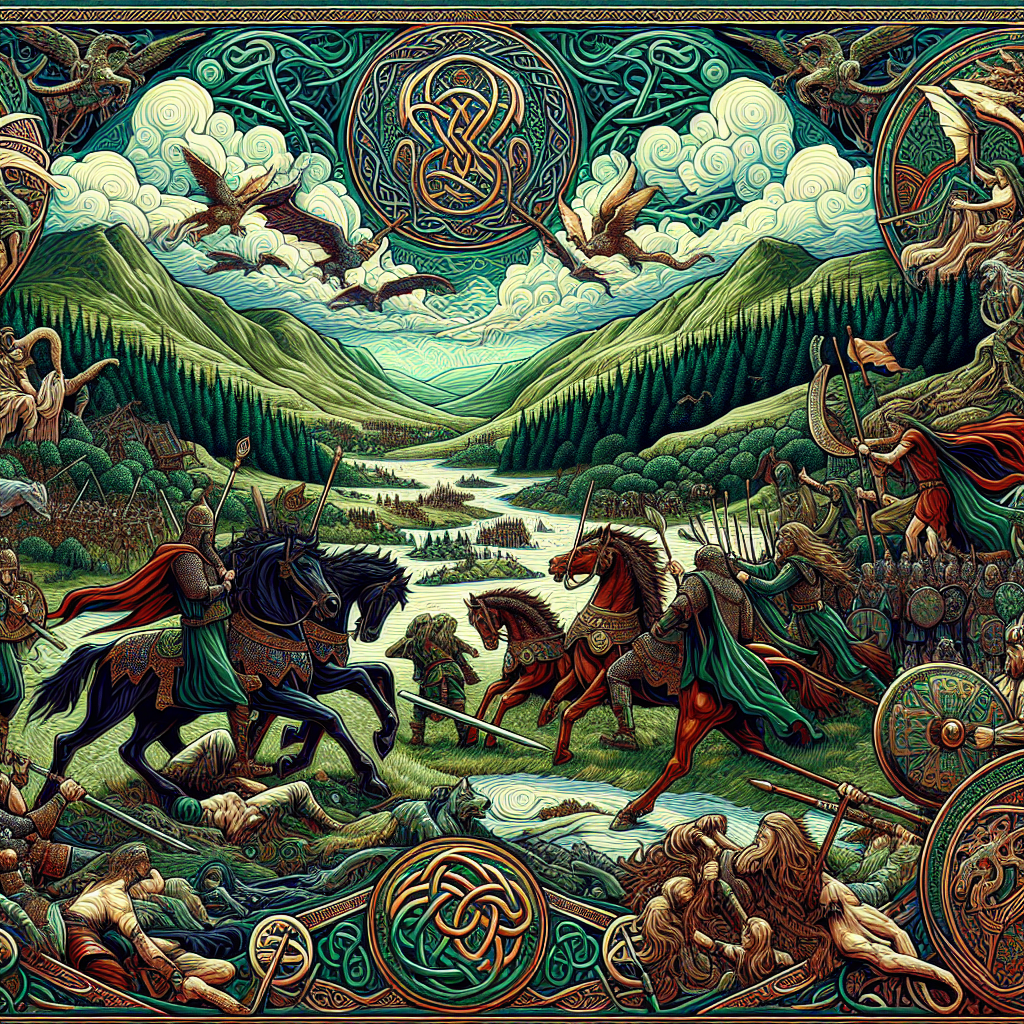
Cath Maige Tuired (First Battl…
Mythological Cycle
Cath Maige Tuired narrates the conflict between the Tuatha Dé Danann and Fomorians, reflecting themes of identity, good vs. evil, and divine intervention, while influencing Irish literature, art, and cultural rituals.
-
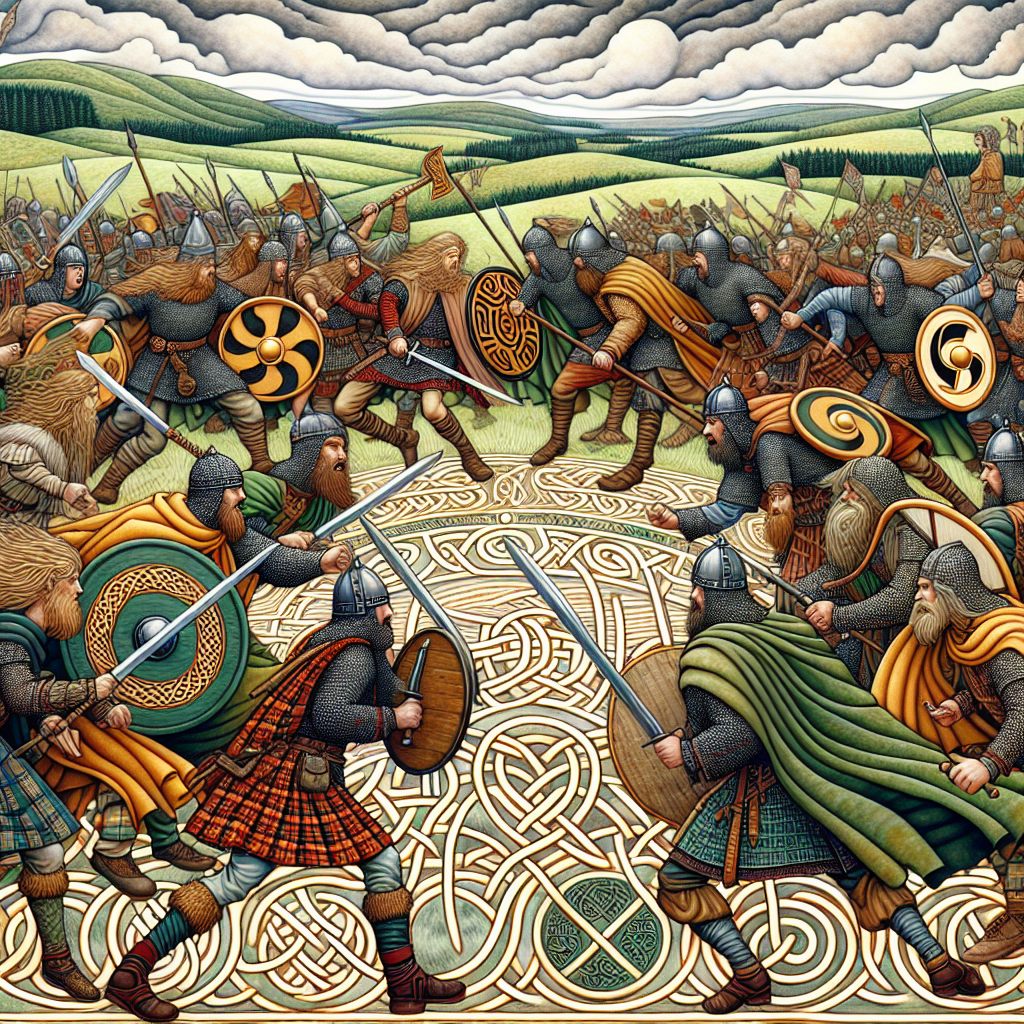
Cath Maige Tuired (Second Batt…
Mythological Cycle
Cath Maige Tuired, the Second Battle of Mag Tuired, narrates the Tuatha Dé Danann's conflict with the Fomorians, exploring themes of good versus evil, identity, and heroism, reflecting ancient Irish cultural values and beliefs.
-
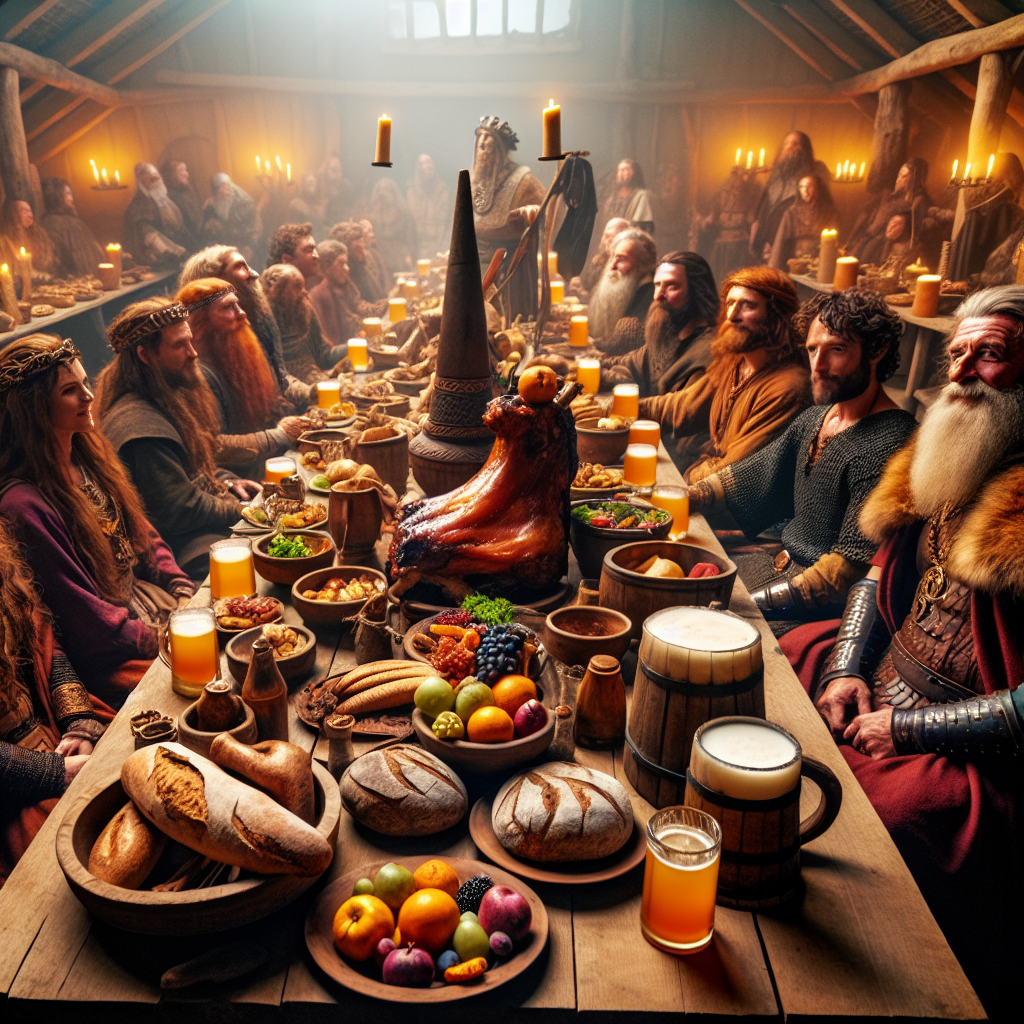
Goibniu’s Feast
Mythological Cycle
Goibniu's Feast celebrates craftsmanship, hospitality, and divine intervention within Celtic mythology, emphasizing community bonds and the cyclical nature of life through shared sustenance among the Tuatha Dé Danann.
-
Lebor Gabála Érenn
Mythological Cycle
The *Lebor Gabála Érenn* chronicles Ireland's invasions and settlers, blending myth with history to shape cultural identity. It features key figures like Partholón and the Milesians, emphasizing themes of land, conflict, and divine influence.
-

The Battle of Moytura
Mythological Cycle
The Battle of Moytura features the Tuatha Dé Danann's struggle against the chaotic Fomorians, embodying themes of order vs. chaos, heroism, and sacrifice, reflecting ancient Irish values and cultural identity.
-
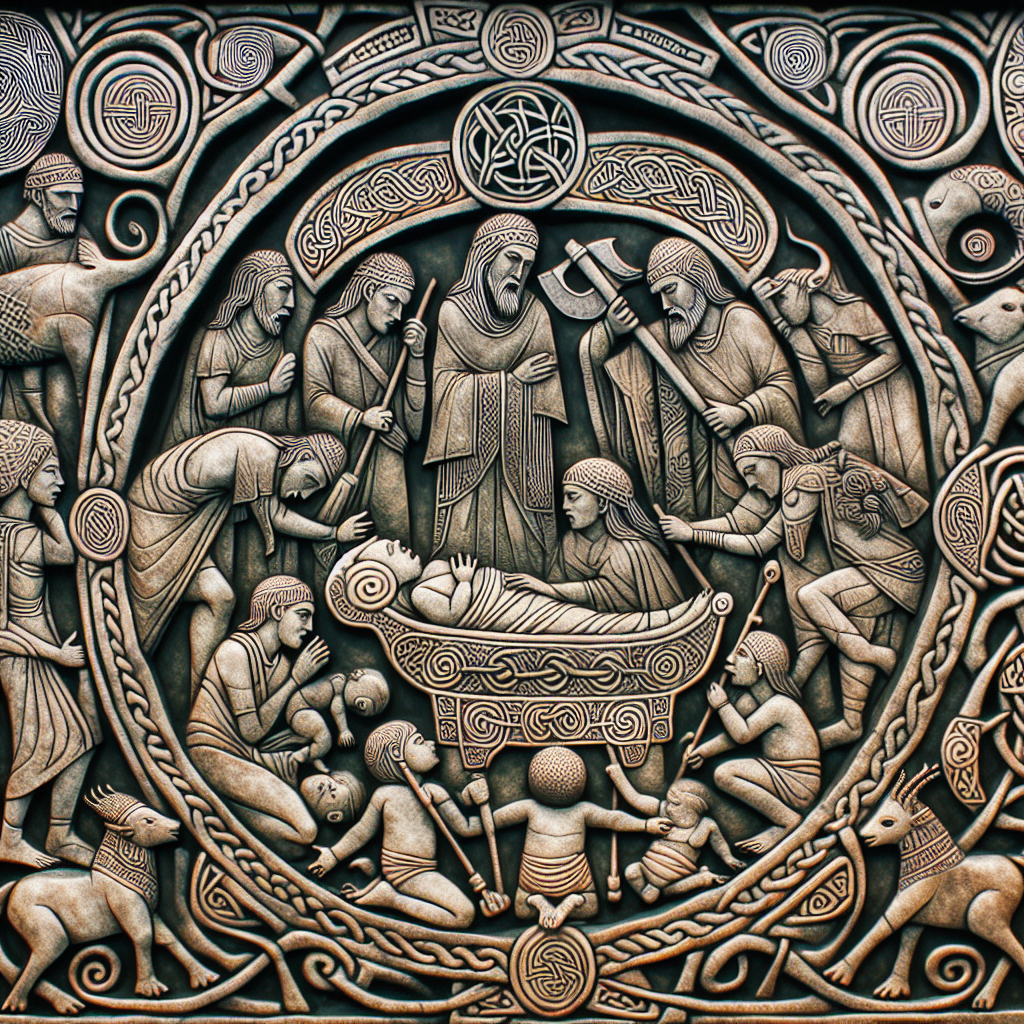
The Birth of Aengus Óg
Mythological Cycle
Aengus Óg, the god of love and youth in Celtic mythology, embodies themes of desire and destiny. His birth narrative involves prophecy, divine parentage, and transformation, reflecting ancient Irish cultural values and beliefs.
-

The Children of Danu
Mythological Cycle
The Children of Danu, or Tuatha Dé Danann, are central to Irish mythology, representing divine ancestry and cultural identity. Key figures include Dagda, Brigid, Lugh, and Morrigan, embodying themes of duality, fertility, and transformation.
-

The Coming of the Milesians
Mythological Cycle
The Milesians, descendants of Míl Espáine, symbolize Gaelic identity in Irish mythology, marking the transition from myth to history through their conquest of the Tuatha Dé Danann, influencing Irish culture and identity.
-

The Coming of the Tuatha Dé Da…
Mythological Cycle
The Tuatha Dé Danann, key figures in Celtic mythology, symbolize a transformative era in Irish lore, embodying themes of conflict, divine heritage, and cultural identity through their arrival and battles, notably against the Fomorians.
-

The Conception of Lugh
Mythological Cycle
Lugh's conception in Celtic mythology involves Cian and Ethne, contrasting destiny and cunning against Balor's strength. This tale reflects themes of prophecy, conflict, and cultural significance, influencing later myths and celebrating artistry and skill.
-

The Dagda’s Club
Mythological Cycle
The Dagda’s club symbolizes power and duality, embodying life and death in Celtic mythology. It highlights themes of regeneration, authority, and the interconnectedness of existence, reflecting ancient beliefs in nature's cycles.
-
The Death of Nuada
Mythological Cycle
Nuada, king of the Tuatha Dé Danann, symbolizes leadership and transformation in Celtic mythology. His death, caused by a battle with Balor, highlights themes of sovereignty, power, and the cyclical nature of life and death.
Mythology
Ancestral gods shaping Celtic identity.