Introduction
In the rich tapestry of Celtic mythology, Goibniu's Feast stands out as a significant narrative from the Mythological Cycle. This cycle encompasses a collection of tales highlighting the gods, goddesses, and heroic figures of ancient Ireland. Goibniu, a divine smith, represents craftsmanship, creation, and sustenance, embodying the values of the Celtic world.
Historical and Mythological Context
The Mythological Cycle is one of the four primary cycles of Irish mythology, comprised of tales that delve into the origins of the Irish people and their divine ancestry. Goibniu is one of the Tuatha Dé Danann, a race of supernatural beings who are central to these myths. He is not just a smith but also a god of hospitality and feasting, reflecting the importance of community and sharing in Celtic culture.
Key Characters
- Goibniu: Divine smith and brewer, known for his craftsmanship and ability to create magical weapons and food.
- Lugh: The god of skill and the sun, often associated with light and harvest.
- Étain: A goddess linked to love and transformation, representing the female aspect of creation.
- The Tuatha Dé Danann: A mythical race that includes several deities and heroes, crucial to Irish folklore.
Key Motifs
Goibniu’s Feast highlights several recurring themes in Celtic mythology:
- Craftsmanship: Goibniu’s skill in forging weapons and brewing is symbolic of creation and the importance of artisans in society.
- Hospitality: The feast represents the communal aspect of Celtic culture, where sharing food is a sacred act.
- Divine Intervention: The narrative emphasizes the role of the gods in human affairs, showcasing their influence over prosperity and protection.
The Feast as a Central Event
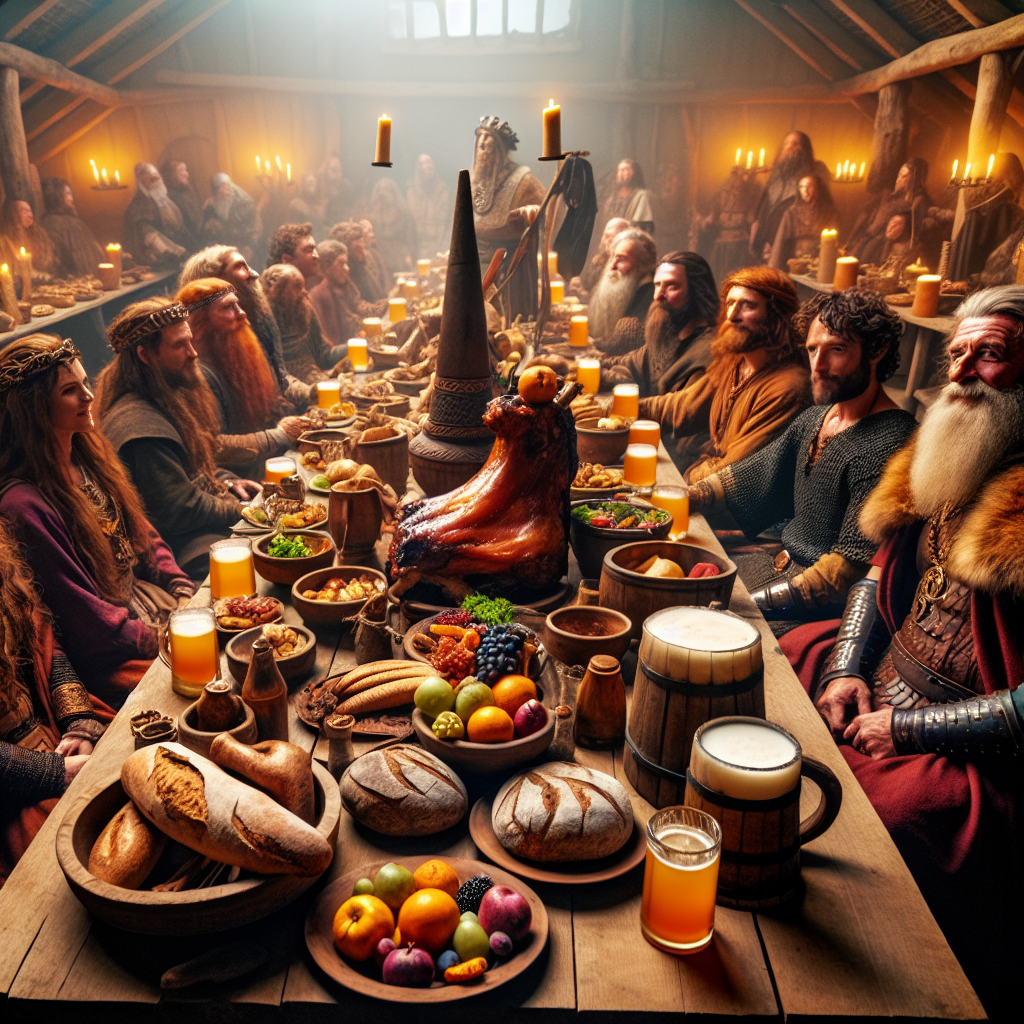
The feast itself is not merely a gathering; it is a celebration of life, death, and rebirth. In the tale, Goibniu provides sustenance that grants immortality to the Tuatha Dé Danann, emphasizing the belief in the cyclical nature of life. The feast serves as a metaphor for unity among the Irish people, underscoring the importance of kinship and community bonds.
The Role of Food and Drink
Food and drink play a pivotal role in Goibniu's narrative:
- Goibniu’s Ale: A magical brew that never runs out, symbolizing abundance.
- Meat of the Feast: Prepared by Goibniu, it offers nourishment and strength, representing the bounty of the land and divine favor.
Cultural Significance
The significance of Goibniu’s Feast extends beyond mythology into the cultural practices of ancient Ireland:
- Community Building: Feasts were communal events that reinforced social ties and cultural identity.
- Rituals: The act of sharing food and drink was often accompanied by rituals, invoking blessings from the gods.
- Storytelling: These feasts became a backdrop for storytelling, preserving history, and reinforcing moral values.
Table of Key Information
| Element | Description |
|---|---|
| Dates | Mythological times, often unspecified |
| Characters | Goibniu, Lugh, Étain, Tuatha Dé Danann |
| Places | Emain Macha, the mythical home of the Ulster kings |
| Themes | Craftsmanship, Hospitality, Divine Intervention |
Conclusion
Goibniu's Feast encapsulates the essence of Celtic mythology, celebrating the intertwined aspects of creation, community, and divine influence. It reflects the values of an ancient society that revered craftsmanship and hospitality, serving as a reminder of the importance of unity and sharing. The tales of Goibniu and his feast continue to resonate, highlighting the enduring legacy of Celtic culture and its mythology.
References
- MacCana, Proinsias. Celtic Mythology.
- O'Rahilly, Thomas. Early Irish History and Mythology.
- McCone, Kim. Celtic Mythology and Religion.
Embrace the rich narratives of Celtic mythology, and discover the profound significance of tales like Goibniu's Feast, where craftsmanship meets community in the sacred act of sharing.
Be the first to comment!
You must log in or signup to post comments.