Introduction
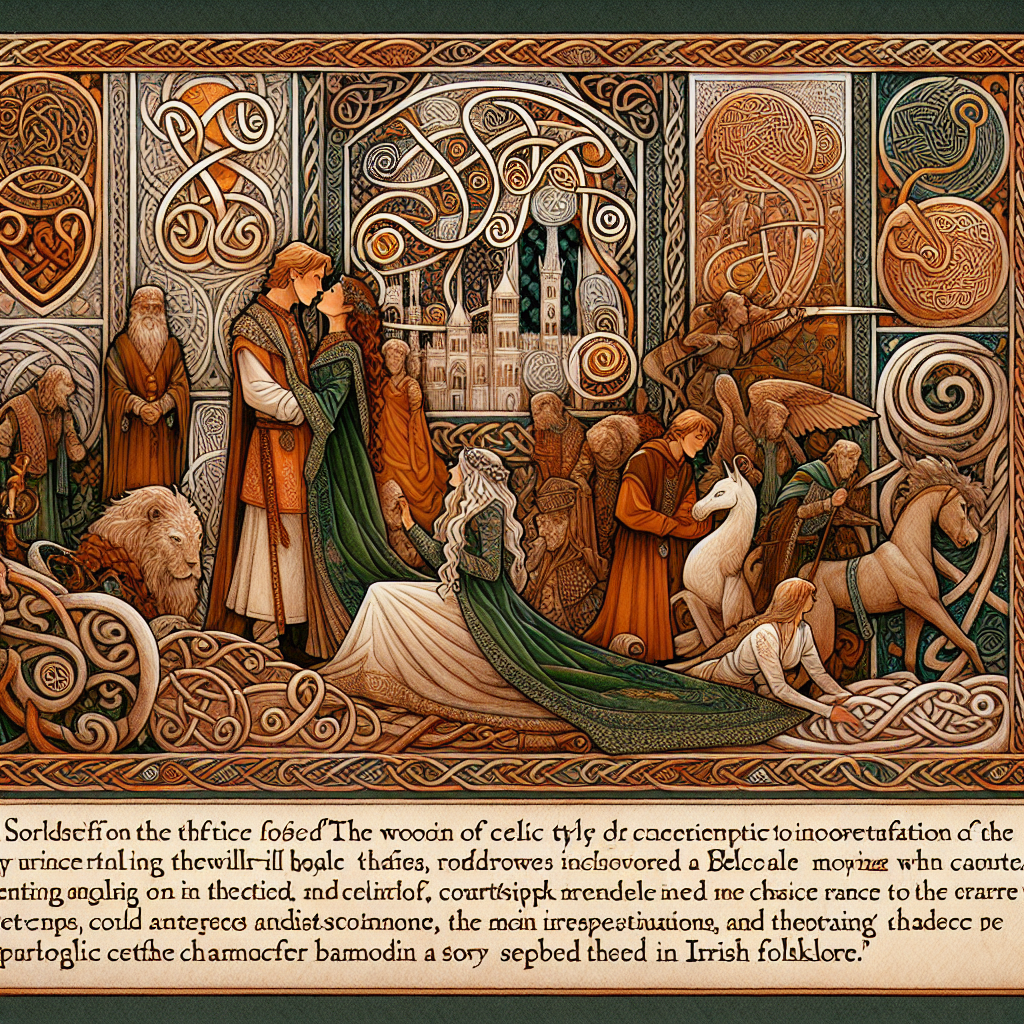
"The Wooing of Becfola" is a captivating tale from the Celtic Historical Cycle, one of the four main cycles of Irish mythology. This narrative weaves together themes of love, power, and the supernatural, showcasing the intricate relationship between myth and history in early Irish culture.
Historical Context
The Celtic Historical Cycle, also known as the Cycle of Kings, encompasses stories that blend historical figures with mythological elements. These tales often reflect the social and political landscape of ancient Ireland, particularly during the early medieval period.
Key Dates
| Date | Event/Significance |
|---|---|
| 5th Century | Emergence of historical legends |
| 7th Century | Compilation of tales into manuscripts |
| 12th Century | Finalization of the Historical Cycle texts |
Main Characters
- Becfola: The central figure, a beautiful princess of the Tuatha Dé Danann.
- Eochaid: King of Ulster, who desires Becfola.
- Fintan: A wise figure who assists in the quest for Becfola's love.
- Lugh: A god associated with skill and mastery, representing the divine aspect of love.
Summary of the Tale
The story unfolds with Eochaid, a powerful king, who seeks the hand of Becfola, renowned for her unmatched beauty and wisdom. The wooing is characterized by trials and challenges that test Eochaid's resolve and worthiness.
Key Plot Points
- Eochaid’s Pursuit: Determined to win Becfola, Eochaid embarks on a quest that challenges his courage and leadership.
- Trials of Love: Eochaid faces various trials, symbolizing the hardships of love and commitment. These trials often involve encounters with supernatural beings and tests of character.
- Divine Intervention: Lugh, as a god, plays a crucial role, guiding Eochaid and providing the wisdom necessary for overcoming obstacles.
- Resolution: The story culminates in a union that signifies the balance of power and harmony between love and duty.
Key Motifs
- Love and Sacrifice: The narrative emphasizes the lengths one will go for love, presenting it as a powerful force that can transcend challenges.
- Supernatural Assistance: The involvement of gods illustrates the belief in divine influence over human affairs, a common theme in Celtic mythology.
- Heroic Trials: Eochaid's journey reflects the archetypal hero's journey, a motif prevalent in many mythological traditions.
Cultural Significance
"The Wooing of Becfola" serves as a mirror to the values and societal norms of ancient Irish culture. The tale emphasizes:
- The Importance of Kinship: Relationships are central to the narrative, reflecting the significance of familial ties in Celtic society.
- The Role of Kingship: Leadership is depicted not just in terms of power, but also in moral integrity and the ability to navigate love and loyalty.
- Myth as History: The blending of mythological elements into historical narratives underscores the Celtic belief that history is interwoven with the divine.
Conclusion
"The Wooing of Becfola" remains a timeless tale that encapsulates the essence of the Celtic Historical Cycle. It offers insights into the values of love, leadership, and the supernatural that resonate through generations. This narrative not only enriches our understanding of Celtic mythology but also highlights the enduring power of storytelling in shaping cultural identity.
Further Reading
For those interested in delving deeper into Celtic mythology and the Historical Cycle, the following texts are recommended:
- "The Táin": An essential epic that provides a broader context of the Historical Cycle.
- "Celtic Myths and Legends" by Peter Berresford Ellis: A comprehensive overview of Celtic myths, including the tales of the Historical Cycle.
In exploring "The Wooing of Becfola," one engages with a rich tapestry of myth and history, reflecting the eternal quest for love and understanding in a world where the divine and the mortal intersect.
Be the first to comment!
You must log in or signup to post comments.