Introduction
The Tale of Taliesin is a captivating story woven into the rich tapestry of Celtic mythology, particularly highlighted in the Mabinogion, a collection of medieval Welsh tales. Taliesin, a legendary bard, is celebrated not only for his poetic prowess but also for his mystical origins and transformative journey, reflecting themes of wisdom, identity, and the interplay between the mundane and the divine.
Historical and Mythological Context
The Mabinogion, compiled in the 12th-13th centuries, draws on oral traditions and earlier texts, preserving tales from the Celtic landscape. Taliesin, whose name means "radiant brow," is believed to have existed in the 6th century, though legends surrounding him emerged much later.
Key Themes
- Transformation: Taliesin's journey encapsulates dramatic changes in identity, reflecting the belief in rebirth and renewal.
- Wisdom and Knowledge: As a bard, Taliesin symbolizes the power of words and knowledge in shaping society.
- The Supernatural: The tale intertwines elements of magic, showcasing the relationship between mortals and the Otherworld.
Characters
- Taliesin: The protagonist, known for his wisdom and musical talent.
- Gwion Bach: A young boy who inadvertently becomes part of Taliesin's transformation.
- Ceridwen: The goddess and mother of Gwion, who seeks revenge and knowledge.
- Awen: The spirit of inspiration, often associated with Taliesin's poetic gifts.
Character Table
| Character | Role | Significance |
|---|---|---|
| Taliesin | Bard and Seer | Embodiment of wisdom and art |
| Gwion Bach | Innocent youth | Catalyst for Taliesin's rebirth |
| Ceridwen | Goddess and Mother | Represents knowledge and fate |
| Awen | Muse of inspiration | Symbolizes artistic creation |
The Tale Unfolds
The Birth of Taliesin
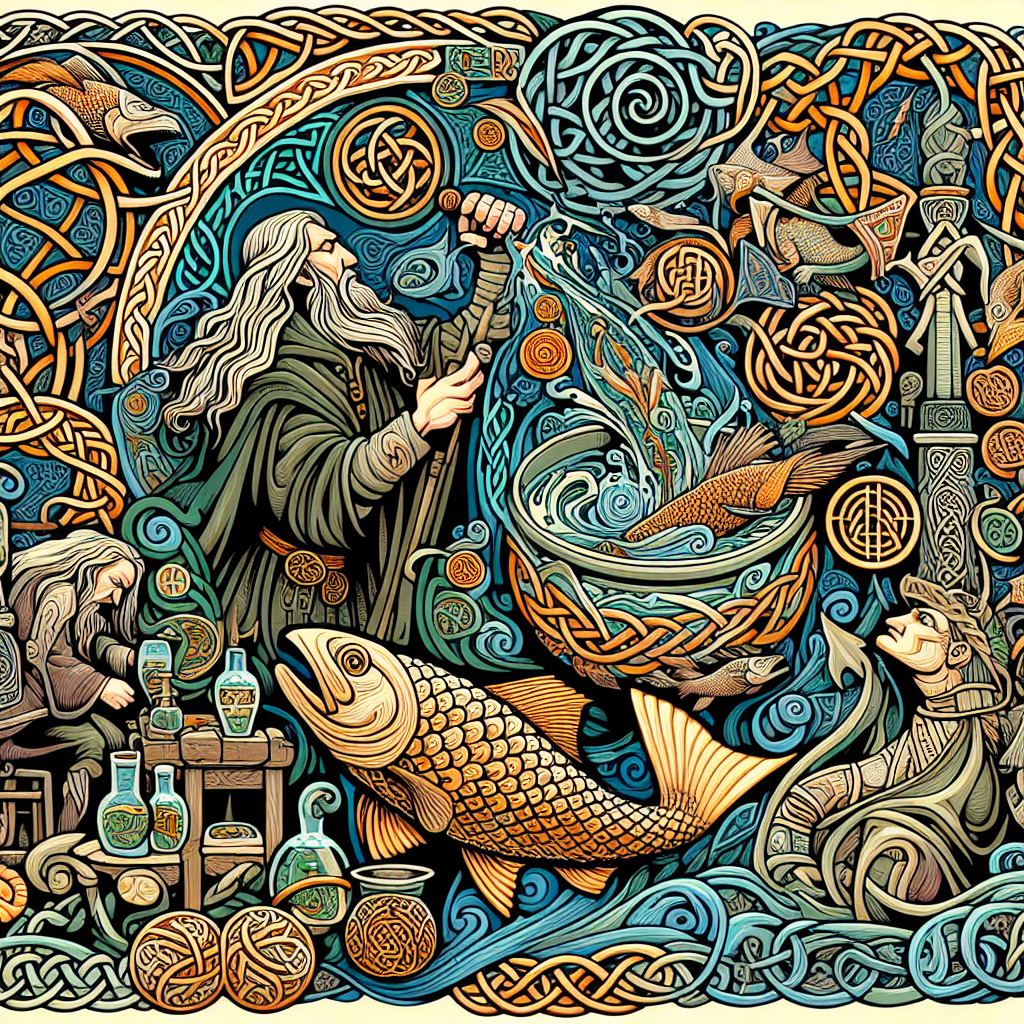
The tale begins with Ceridwen, who desires to create a potion that grants wisdom. She brews a cauldron of inspiration, but only three drops fall to the ground, consumed by Gwion Bach. These drops transform him into the wise Taliesin, setting off a chain of events that defines his identity.
The Pursuit
Ceridwen, enraged by Gwion's transformation, chases him across the land. Their pursuit is a metaphoric exploration of knowledge and the consequences of seeking wisdom. Gwion evades her by shapeshifting into various forms, a motif reflecting the fluidity of identity.
The Resolution
Ultimately, Ceridwen catches Gwion, but instead of vengeance, she recognizes his wisdom and takes him in as her own. This reconciliation symbolizes the balance between destruction and creation, highlighting the transformative power of knowledge.
Cultural Significance
The Tale of Taliesin serves as a critical reflection on the role of bards in Celtic society. Bards were not just entertainers; they were custodians of history and culture, wielding significant influence through their words. Taliesin embodies this ideal, representing the connection between the human experience and the divine.
Influence on Literature and Art
Taliesin's story has inspired countless works across various mediums, from poetry to visual arts. His legacy is evident in modern interpretations of Celtic themes, emphasizing the enduring nature of mythological narratives.
Conclusion
The Tale of Taliesin is more than a mere story; it is a profound exploration of identity, wisdom, and the mystical connections that permeate Celtic mythology. Through its characters and themes, it invites readers to reflect on the power of transformation and the importance of knowledge in shaping one’s destiny. This tale remains a cornerstone of the Mabinogion, illuminating the vibrant culture of ancient Wales and its timeless relevance.
References
For further reading on the Mabinogion and Taliesin, consider:
- The Mabinogion (translated by Jeffrey Gantz)
- The Book of Taliesin (edited by J. E. Caerwyn Williams)
- Celtic Myth and Legend (by Charles Squire)
Be the first to comment!
You must log in or signup to post comments.