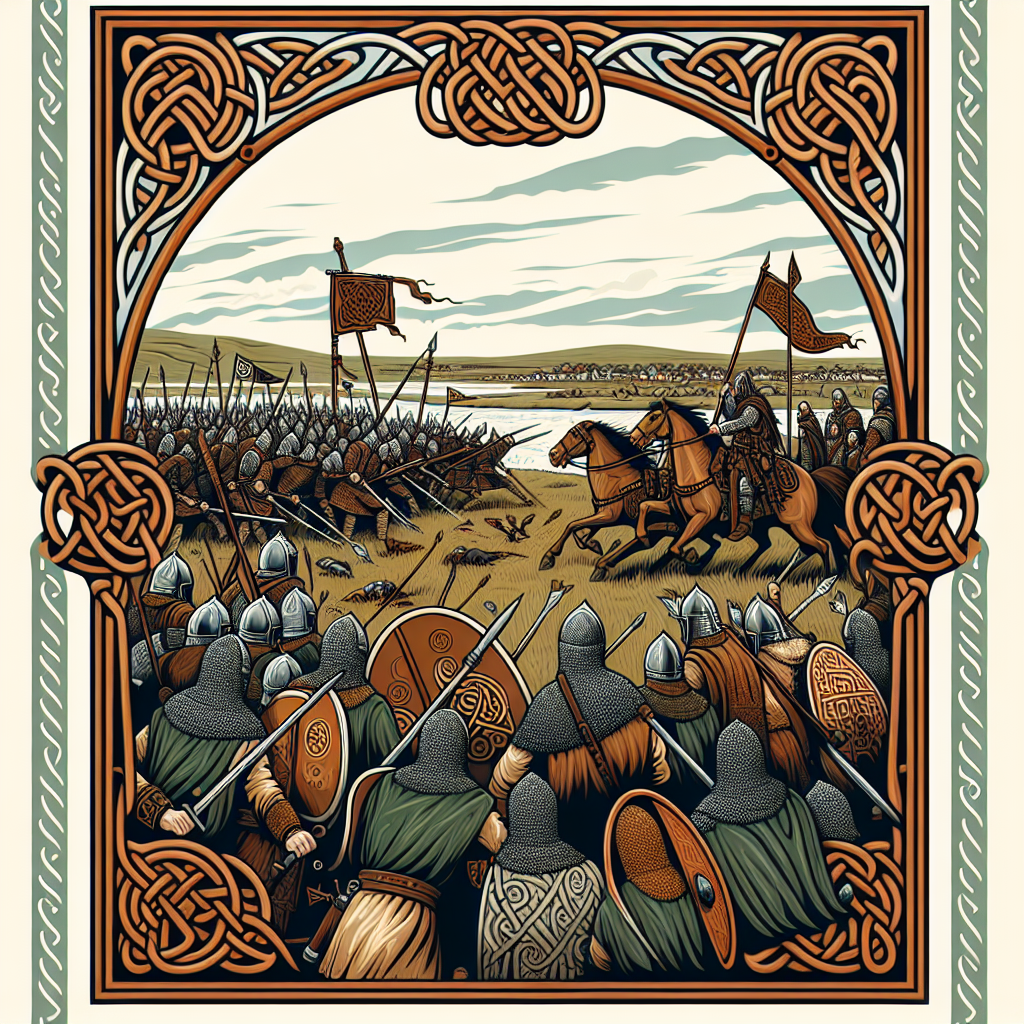
The Battle of Crinna is a significant event within the Celtic Historical Cycle, showcasing the blend of history and mythology that characterizes early Irish literature. It encapsulates themes of heroism, loyalty, and the tragic consequences of war, providing insight into the values and beliefs of early Celtic society.
Historical Context
The Battle of Crinna is often placed around the late 1st century A.D., during a period when the Irish were engaging in various tribal conflicts. This battle is principally recorded in the Annals of the Four Masters and the Book of Leinster, sources that intertwine mythological elements with historical narratives.
Key Dates and Locations
| Date | Event | Location |
|---|---|---|
| c. 100 A.D. | Battle of Crinna | Crinna, Ireland |
| c. 1st century | Rise of Uí Néill dynasty | Ulster region |
Characters
The battle features several notable characters:
- Cú Chulainn: The legendary hero of Ulster, renowned for his unmatched prowess in battle.
- Conochbar mac Nessa: The king of Ulster who leads his forces into battle.
- Fergus mac Róich: A former king of Ulster, who fights alongside Cú Chulainn.
- Mairead: A lesser-known figure, often depicted as a tragic character affected by the war.
Mythological Context
The Battle of Crinna serves as a backdrop for the exploration of key Celtic themes such as:
- Heroic Valor: The courage displayed by warriors, particularly Cú Chulainn, epitomizes the heroic ideal.
- Fate and Prophecy: The influence of fate is prominent, with prophecies often foreshadowing the outcomes of battles.
- Betrayal and Loyalty: Personal relationships and allegiances are tested, highlighting the tension between loyalty to kin and the greater good.
Key Motifs
- The Hero’s Journey: Cú Chulainn's exploits reflect the archetypal hero's journey, marked by trials and moral dilemmas.
- The Power of the Supernatural: The presence of gods and supernatural forces influences events, reinforcing the mystical elements of Celtic belief.
- The Tragic Hero: Cú Chulainn’s fate, often marked by tragedy, resonates with the inevitable downfall of great heroes.
Cultural Significance
The Battle of Crinna is more than just a historical event; it plays a crucial role in the development of Irish identity. It embodies the struggles of the Ulster warriors, reflecting the broader conflicts of the time. The narrative also serves to reinforce:
- Nationalism: The valorization of local heroes contributes to a sense of national pride.
- Oral Tradition: The story has been passed down through generations, showcasing the importance of oral storytelling in preserving cultural heritage.
- Moral Lessons: Through the characters’ experiences, audiences learn about the values of bravery, loyalty, and the tragic consequences of war.
Conclusion
The Battle of Crinna is a compelling intersection of history and mythology, highlighting the complexities of heroism and the cultural values of the Celts. As part of the Historical Cycle, it invites readers to reflect on the nature of conflict and the enduring legacy of myth in shaping national identity. The echoes of this battle continue to influence Irish literature and culture today, underscoring the timeless relevance of its themes.
References
- Annals of the Four Masters
- Book of Leinster
- MacKillop, James. A Dictionary of Celtic Mythology. Oxford University Press, 1998.
In exploring these themes and characters, we gain a deeper understanding of the Celtic worldview and the narratives that shaped early Irish society.
Be the first to comment!
You must log in or signup to post comments.