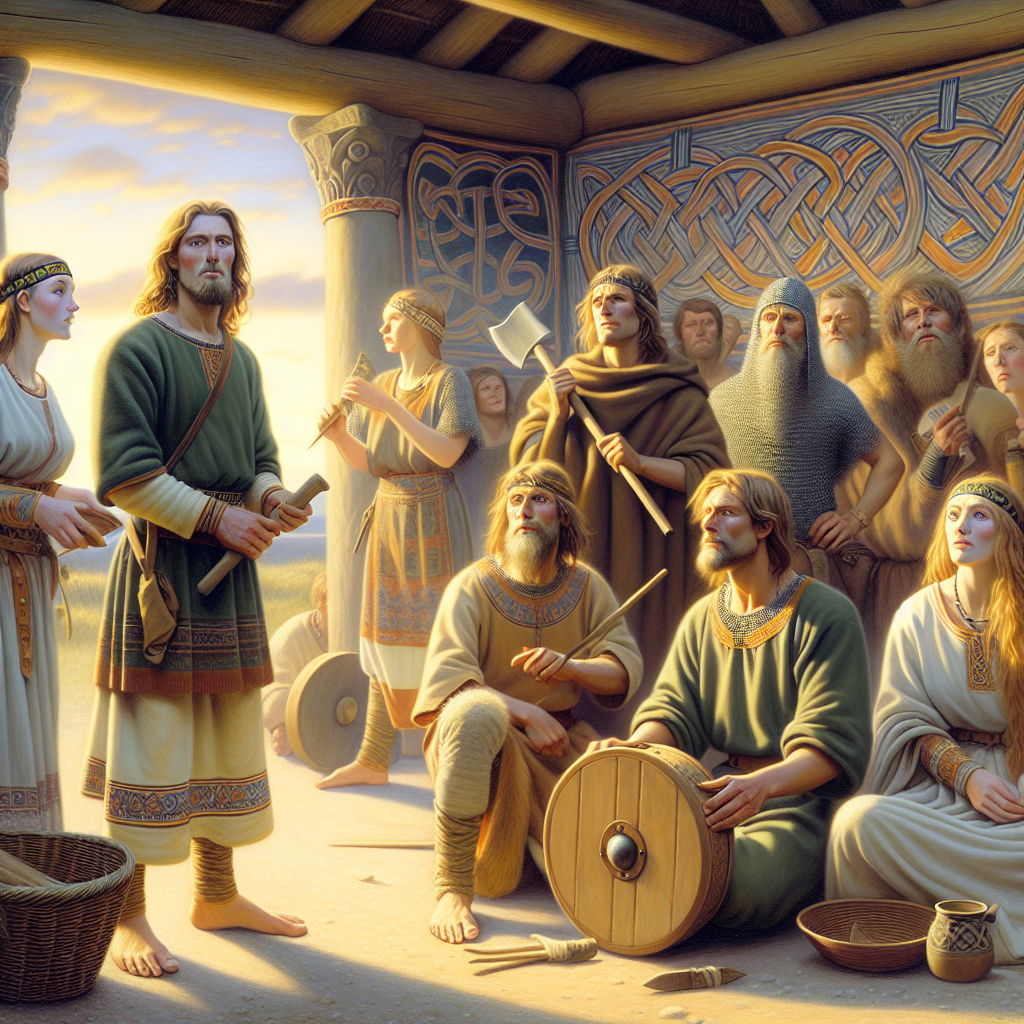
Emergence of Urnfield culture in Central Europe, seen as ancestral to later Celtic-speaking peoples
- Ceilteach.org
- 115 views
- Login to like
The Urnfield Culture
Around 1600 BCE, the Urnfield culture emerged in Central Europe. This culture is seen as ancestral to the later Celtic-speaking peoples.
Characteristics of the Urnfield Culture
The Urnfield culture is named after their practice of cremating the dead and placing their ashes in urns, which were then buried in fields. They were also known for their bronze work, which included weapons, tools, and jewelry.
| Artifact | Material |
|---|---|
| Swords | Bronze |
| Axes | Bronze |
| Jewelry | Bronze, Gold |
Connection to Celtic-Speaking Peoples
The Urnfield culture is believed to be the precursor to the Hallstatt culture, which is associated with the early Celts. The transition between these cultures was marked by advancements in ironworking and the introduction of the Celtic language.
Legacy of the Urnfield Culture
The Urnfield culture left a significant impact on the history of Central Europe. Their practices and innovations laid the groundwork for the development of the Celtic culture.
Be the first to comment!
You must log in or signup to post comments.