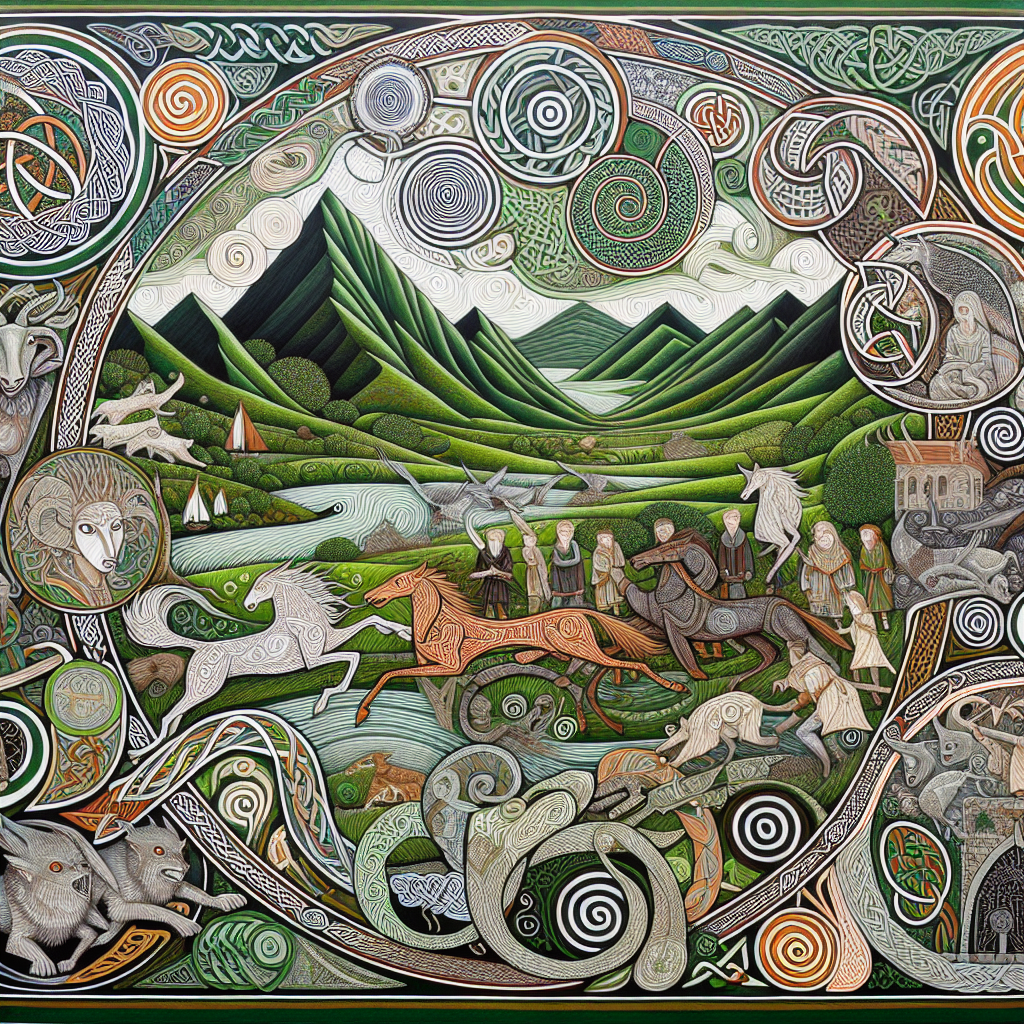
The Fenian Cycle is a rich tapestry of legends revolving around the exploits of the Fianna, a band of warrior-hunters in ancient Ireland. Among the many tales, "The Chase of Sliabh Cuilinn" stands out for its action, themes of loyalty, and the interplay between humans and the supernatural.
Historical and Mythological Context
The Fenian Cycle is rooted in Irish mythology from the early medieval period, reflecting the culture and values of ancient Gaelic society. It features prominent characters such as Finn MacCool, the leader of the Fianna, and his band of warriors, who often engage in quests that test their bravery and honor.
Key Historical Context
- Period: Early medieval Ireland (circa 5th-12th century)
- Cultural Influence: Gaelic oral tradition, storytelling, and folklore
Synopsis of "The Chase of Sliabh Cuilinn"
"The Chase of Sliabh Cuilinn" recounts the pursuit of a magical boar that possesses the ability to evade capture. This chase becomes a test of skill and bravery for the members of the Fianna, leading them through enchanted landscapes and into encounters with otherworldly beings.
Characters Involved
- Finn MacCool: The legendary leader of the Fianna.
- Diarmuid Ua Duibhne: A valiant warrior known for his beauty and tragic fate.
- Goll mac Morna: A rival to Finn who often embodies the themes of rivalry and conflict.
- The Enchanted Boar: A creature symbolizing the elusive nature of desire and ambition.
Key Motifs
Several motifs recur throughout the tale, enriching its narrative and thematic depth:
- Chase: Symbolizes the pursuit of unattainable goals, both literal and metaphorical.
- Nature vs. Supernatural: The landscape of Sliabh Cuilinn serves as a boundary between the mundane world and the mystical.
- Rivalry and Loyalty: The dynamics between Finn and Goll reflect deeper themes of brotherhood and enmity.
Cultural Significance
"The Chase of Sliabh Cuilinn" encapsulates essential aspects of Celtic culture, such as the importance of valor, the deep connection with nature, and the celebration of heroic deeds. This tale, like many in the Fenian Cycle, served to instill a sense of identity and continuity within Irish society.
Themes Explored
| Theme | Description |
|---|---|
| Heroism | Valor in the face of challenges |
| Nature's Power | The boar as a symbol of nature's might |
| Friendship & Rivalry | The bonds and conflicts within the Fianna |
Conclusion
"The Chase of Sliabh Cuilinn" remains a compelling narrative within the Fenian Cycle, resonating with themes that are timeless in their appeal. It illustrates not only the valor of the Fianna but also the intricate relationship between humanity and the mystical elements of the world. Such tales continue to inspire and inform the cultural identity of modern Ireland, reminding us of our shared past and the enduring power of storytelling.
References
- Ó hÓgáin, Daithí. Myth, Legend & Romance: An Encyclopedia of the Irish Folk Tradition.
- MacKillop, James. Dictionary of Celtic Mythology.
This tale, and the broader Fenian Cycle, serves as a reminder of the rich mythological heritage that shapes Irish culture today.
Be the first to comment!
You must log in or signup to post comments.