Introduction
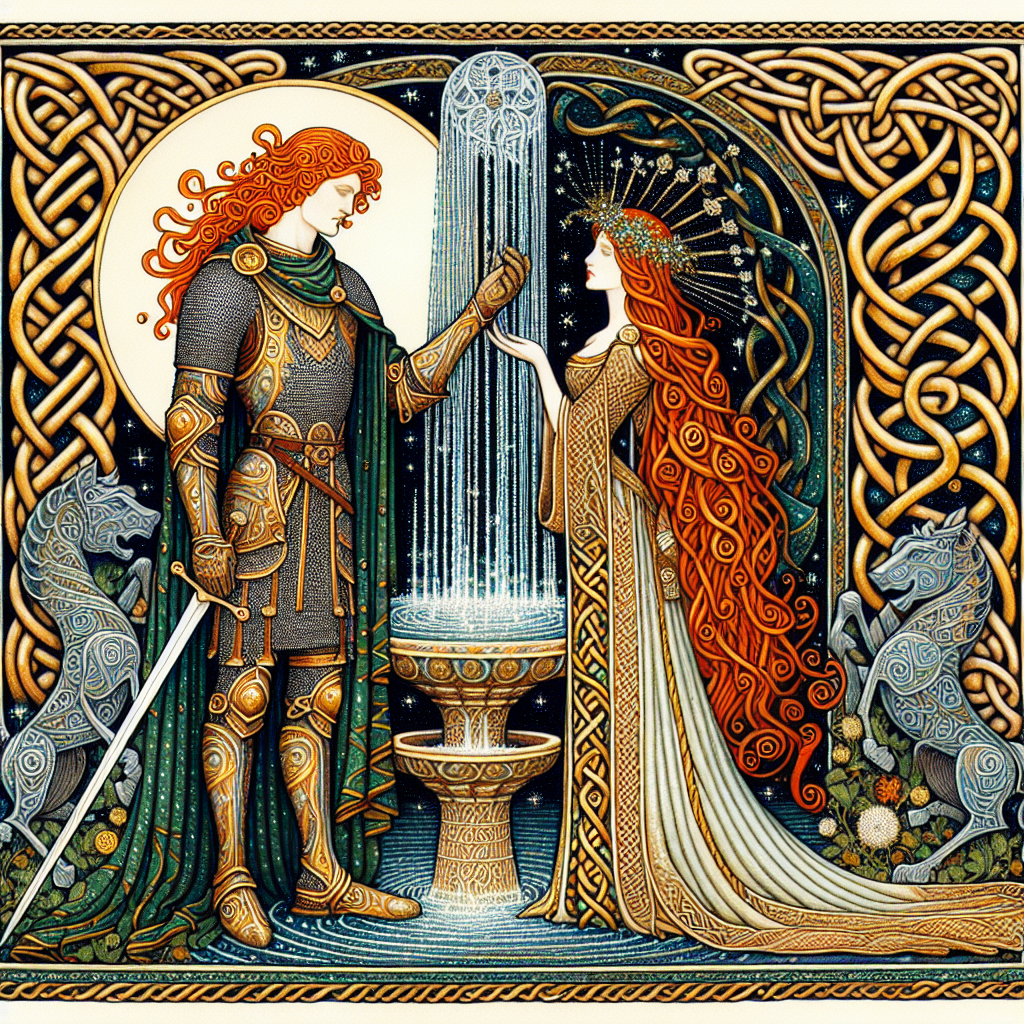
"Owain, or the Lady of the Fountain" is one of the enchanting tales from the Mabinogion, a collection of medieval Welsh prose stories. This narrative intertwines themes of chivalry, love, and the supernatural, reflecting the rich tapestry of Celtic mythology and Arthurian legend.
Historical and Mythological Context
The Mabinogion dates back to the 12th to 13th centuries, although its roots lie in oral traditions much older. The stories reflect the cultural milieu of medieval Wales, showcasing the values, customs, and beliefs of the Celtic peoples.
Key Points:
- Celtic Influence: The narrative incorporates elements of Celtic mythology, such as magical beings and the significance of nature.
- Arthurian Connections: Owain is often linked with King Arthur's court, illustrating the interplay between Welsh folklore and Arthurian legend.
Table of Key Elements
| Element | Details |
|---|---|
| Date | Circa 12th-13th century |
| Main Characters | Owain, Lady of the Fountain, Yvain |
| Setting | Enchanted landscapes, Arthur's court |
| Themes | Chivalry, Love, Transformation |
Characters
Owain
Owain, a knight of Arthur’s court, embodies the noble qualities expected of a hero. His journey is marked by personal growth and the quest for honor.
Lady of the Fountain
The Lady of the Fountain is a mystical figure who represents both love and the trials of loyalty. Her enchantment reflects the duality of beauty and danger often found in Celtic tales.
Supporting Characters
- Yvain: A fellow knight who represents rivalry and the theme of friendship.
- Arthur: The legendary king who plays a pivotal role in establishing the knights' quests.
Key Motifs
The Quest
Owain’s journey begins with a quest to prove his worth, a common motif in Celtic tales. This quest leads him to the enchanted fountain, where he encounters the Lady.
Transformation
Transformation plays a crucial role in this narrative. Owain undergoes significant personal change, learning the importance of humility and devotion.
Love and Loyalty
The relationship between Owain and the Lady emphasizes themes of love, fidelity, and the struggles faced in romantic pursuits. Their bond is tested, highlighting the complexities of human emotions.
Cultural Significance
"Owain, or the Lady of the Fountain" serves as a window into the values of medieval Welsh society. The story emphasizes the importance of honor, the significance of nature, and the intricacies of relationships.
Influence on Literature
The Mabinogion has influenced countless writers and artists, shaping the landscape of both Welsh and broader British literature. Its themes resonate through numerous adaptations and retellings in modern media.
Preservation of Welsh Heritage
By chronicling these tales, the Mabinogion preserves essential aspects of Welsh culture, language, and identity. It emphasizes the connection between the past and the present, fostering a sense of cultural pride.
Conclusion
"Owain, or the Lady of the Fountain" is more than just a tale of adventure; it is a rich narrative that encapsulates the essence of Celtic mythology and the values of its time. Through its characters and motifs, it continues to engage and inspire readers, ensuring its place in the canon of Welsh literature.
References
- The Mabinogion, translated by Jeffrey Gantz, Penguin Classics.
- Celtic Myth: A Very Short Introduction, by Barry Cunliffe, Oxford University Press.
Be the first to comment!
You must log in or signup to post comments.